Operational Technology security has become a strategic control point capable of producing physical and societal impact without traditional IT-style cyber incidents. This blog post discusses the multiple advantages of using an integrated cybersecurity solution, as well as its effectiveness in combating changing cyber threats.
When Power Went Out, OT Took Centre Stage
In early January, parts of Venezuela experienced targeted power disruptions during a high-stakes national security operation.

According to reporting by SecurityWeek, citing briefings later confirmed by The New York Times, cyber capabilities were used to interfere with Operational Technology (OT) systems controlling electricity and air-defence infrastructure. Power was reportedly shut off and then selectively restored within minutes in some areas.
There was no ransomware note.
No widespread data breach.
No visible destruction of equipment.
Yet real-world systems were influenced with precision and intent.
Initial explanations focused on infrastructure failure.
Then, on possible kinetic causes.
Only later did cybersecurity clearly enter the conversation.
Attribution debates aside, the lesson was unmistakable:
Operational Technology security has become a strategic control point capable of producing physical and societal impact without traditional IT-style cyber incidents.
That moment didn’t create the OT security problem.
But it made it impossible to ignore.
And as we enter 2026, the same dynamics are playing out far beyond geopolitics—inside industrial enterprises, utilities, manufacturing facilities, and critical infrastructure environments worldwide.
For a long time, OT teams worked quietly.
If machines ran, nobody asked questions.
If production was on time, everyone was happy.
Cybersecurity lived somewhere else.
But over the last few years, and especially entering 2026, something has changed.
When OT fails today, it doesn’t just affect a plant.
It affects revenue, safety, reputation, and sometimes entire regions.
And leadership has started to notice.
A Quick Reality Check
Here are a few numbers that explain why industrial cybersecurity feels different now:
- Over 70% of industrial organisations reported at least one cyber-related disruption in the last 12 months.
- Nearly 1 in 3 OT incidents resulted in production downtime, not just alerts.
- The average OT outage now costs anywhere between ₹8–20 crore per incident, depending on the sector.
These aren’t “IT problems.”
These are business problems.
1. OT Is No Longer Invisible to the Board
In 2026, OT security discussions are happening where they never used to:
- Boardrooms
- Risk committees
- Insurance negotiations
Why?
Because when OT stops, everything stops.
- Supply chains break.
- SLAs fail.
- Regulators ask uncomfortable questions.
OT is no longer just an engineering concern.
It has become a business continuity and operational resilience issue.
2. Cyber Attacks Are Becoming Operational Incidents
Attackers have learned something important.
They don’t need to shut everything down to cause damage.
Small changes can be enough:
- A delayed process
- A manipulated sensor reading
- A system running just outside safe limits
That’s what makes them dangerous.
By the time someone realises it’s cyber, the impact has already happened.
This is why OT threat detection and continuous monitoring are becoming critical components of modern cybersecurity strategies.
3. IT–OT Connectivity Is Here to Stay
Remote access.
Vendor support.
Cloud dashboards.
Central SOCs.
OT is connected now—permanently.
In fact, more than 80% of industrial sites allow some form of external connectivity into OT environments.
The question in 2026 isn’t:
“Should OT be connected?”
It’s:
“Who controls that connection and under what conditions?”
As IT and OT convergence continues, organisations must strengthen:
- Remote access security
- Vendor access governance
- Network segmentation
- Zero Trust architectures
Recommended Internal Link OT Security Solutions
4. Visibility Is Moving Beyond Asset Lists
Most organisations can now answer:
“What devices do we have?”
Fewer can answer:
“What should they be doing right now?”
In 2026, OT visibility is becoming more about:
- Expected behavior
- Normal communication patterns
- Operational context
Because when something goes wrong, teams don’t need more alerts.
They need clarity.
Modern OT asset discovery and industrial network monitoring platforms help organisations understand both assets and operational behaviour.
Recommended Internal Link ZeroHack ASM – Industrial Asset Visibility Platform
5. Identity Is Becoming the Weakest Link
One uncomfortable truth keeps repeating itself:
Most OT incidents don’t start with malware.
They start with legitimate access.
Examples include:
- Vendor credentials that never expired
- Engineers with broad permissions
- Shared accounts no one remembers creating
In 2026, organisations are finally strengthening OT access management through:
- Shorter access windows
- Role-specific permissions
- Continuous activity monitoring
- Enhanced audit visibility
Trust is no longer permanent.
This shift aligns closely with Zero Trust for OT environments, where access is continuously verified rather than automatically trusted.
6. Resilience Is the New Success Metric
In the past, security teams asked:
“Did we prevent the attack?”
In 2026, the question has shifted:
“How well did we handle it?”
Organisations are increasingly measuring:
- Time to detect operational impact
- Time to contain threats without shutdown
- Time to return to safe operations
- Recovery effectiveness
Security is no longer about perfection.
It’s about cyber resilience and controlled recovery.
What This All Means for Industrial Organisations
OT environments are becoming:
- More connected
- More complex
- More exposed
At the same time, expectations are higher than ever.
Leadership doesn’t expect zero incidents.
They expect prepared teams.
Organisations that invest in:
- OT visibility
- Threat detection
- Asset discovery
- Network segmentation
- Identity governance
- Incident response readiness
will be far better positioned to handle future threats.
Final Thought
Operational Technology runs the real world.
In 2026, protecting it isn’t about fear.
It’s about responsibility.
Because when OT systems fail, the impact isn’t digital.
It’s real.
To overcome all this, presenting India’s First and Only Full-Stack OT Cybersecurity Platform.
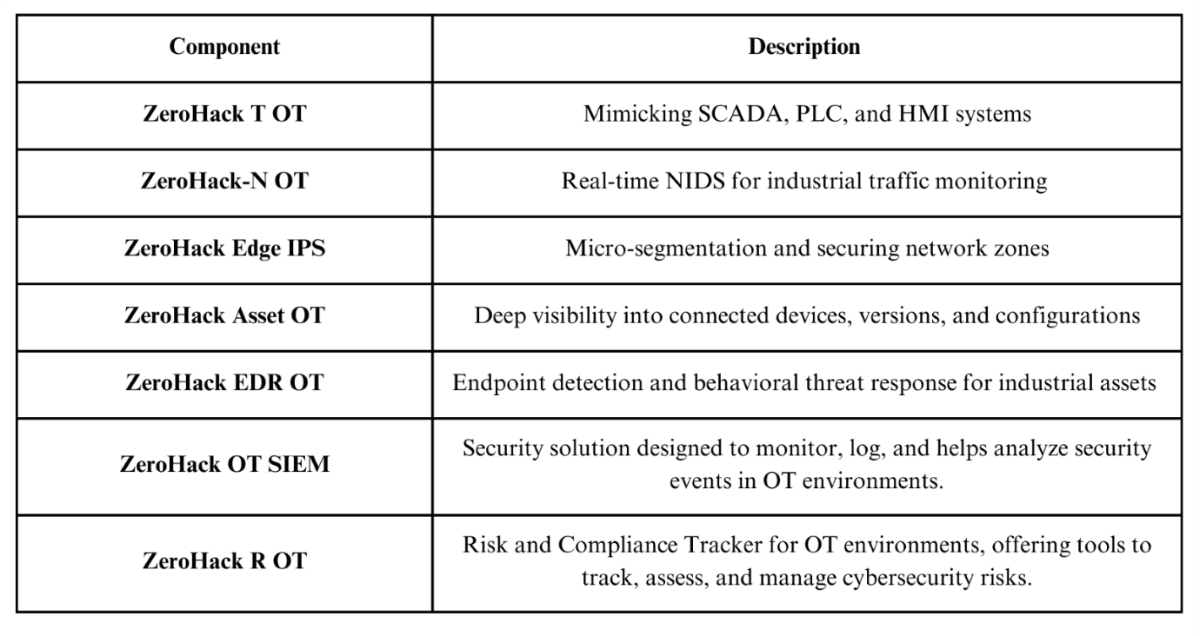
WhizHack Technologies delivers the nation’s first complete OT security portfolio, engineered to safeguard critical infrastructure, industrial facilities, utilities, manufacturing environments, and operational control systems.
Whether you operate a private facility, manage regional operations, or oversee large-scale critical infrastructure, we help secure the unseen systems that keep operations safe, reliable, and resilient.
Relevant WhizHack Solutions
Questions This Brings to the Table
- If an OT incident occurred today, how quickly would it be identified as a cyber event rather than a mechanical or process failure?
- Is there clear visibility into who currently has access to OT systems, and whether that access is justified, time-bound, and actively monitored?
- Are OT security decisions being driven by real operational risk and business impact—or primarily by compliance requirements?